Gwynedd, North Wales · UNESCO World Heritage Site
Caernarfon Castle:
an independent guide to Wales's most theatrical fortress
Everything you need to plan a visit to Castell Caernarfon — the history, the towers, current ticket prices, opening times, parking, accessibility, and what's genuinely worth your time once you're through the King's Gate. Written and fact-checked against official sources, none of which is us.
§01 — At a glance
What Caernarfon Castle actually is
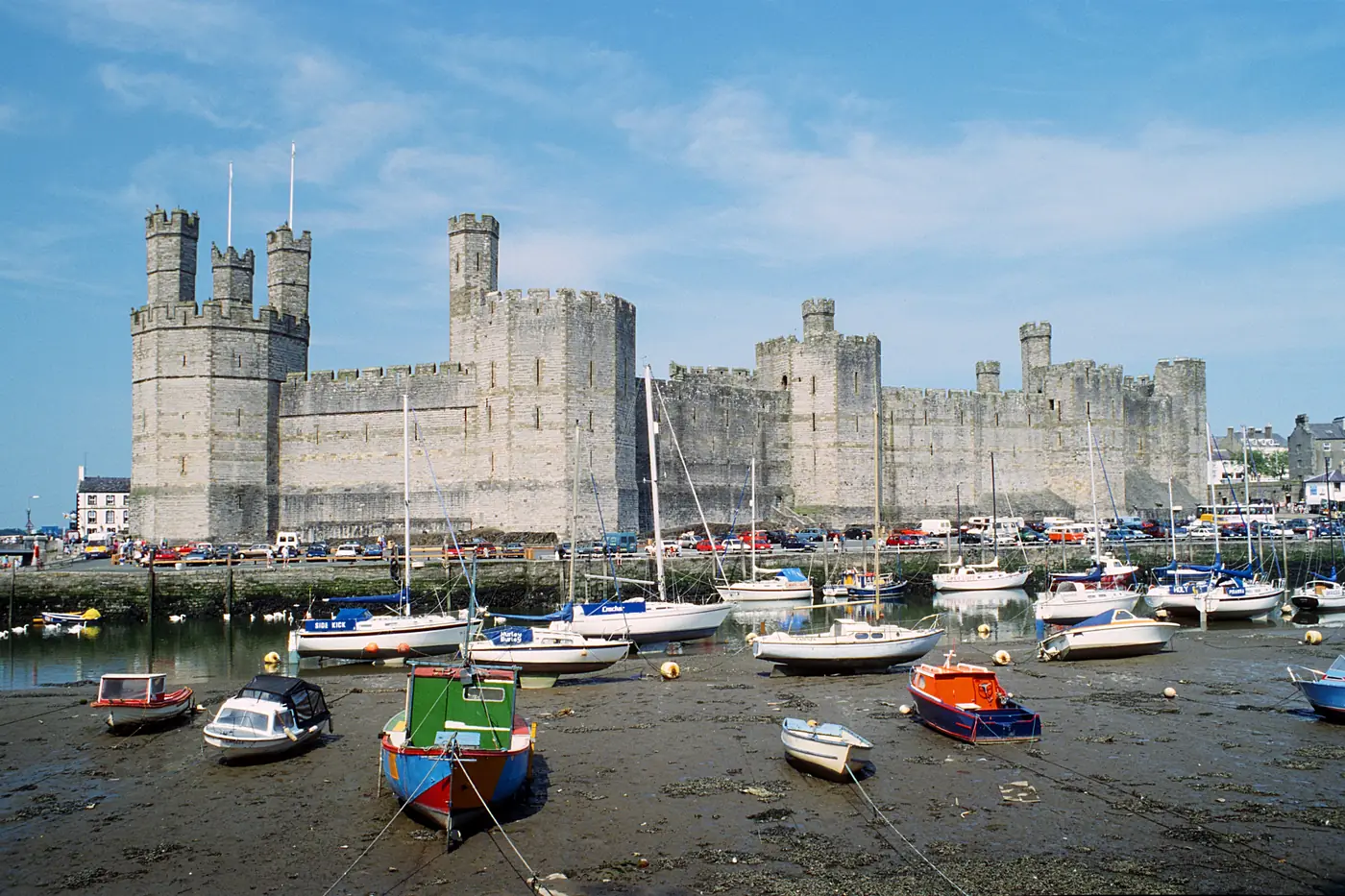
Caernarfon Castle is a fortress-palace on the banks of the River Seiont, begun in 1283 for King Edward I of England as the administrative headquarters of his newly conquered north Wales. It was designed by the master mason James of St George, whose polygonal towers and banded masonry were modelled — deliberately — on the walls of Constantinople. It is not, and has never been, a National Trust property: it is cared for by Cadw, the Welsh Government's historic environment service.
§02 — Start here
Plan your visit
Tickets & Prices
Adult, family, senior and concession pricing, plus the £1 access ticket scheme — sourced directly from Cadw.
Read the guide → PracticalOpening Times
Seasonal hours across the year, last admission times, and the three days the castle closes completely.
Read the guide → PracticalGetting Here & Parking
By road, rail, bus and bike — plus where to leave the car without a 20-minute walk back.
Read the guide → InsideCastle Layout & Towers
An annotated plan of the Eagle Tower, King's Gate, Queen's Tower and the rest, so you know what you're looking at.
Read the guide → PracticalAccessibility Guide
What a Level 4 "strenuous" terrain rating actually means underfoot, plus the King's Gate lift and dog policy.
Read the guide → OpinionIs It Worth Visiting?
An honest editorial take on who will love this castle, and who might be better suited to Conwy or Beaumaris.
Read the guide →§03 — The story
Seven centuries in brief
Edward I began building Caernarfon in the summer of 1283, fresh from his conquest of the Welsh princes, as one castle in an "Iron Ring" that also included Conwy, Harlech and Beaumaris. He built it on the site of an earlier Norman motte-and-bailey castle, and deliberately beside the Roman fort of Segontium — a calculated echo of imperial power aimed squarely at the Welsh.
His son, born at the castle in 1284, became the first English Prince of Wales. The tradition of investing the heir to the throne at Caernarfon was revived in 1911 and again in 1969, when a 20-year-old Prince Charles — later King Charles III — was invested here in front of a television audience estimated at 500 million people.
Construction begins under King Edward I and master mason James of St George.
Edward of Caernarfon is born at the castle; later becomes Edward II, the first English Prince of Wales.
Welsh forces under Madog ap Llywelyn briefly capture and damage the unfinished castle.
Building work effectively ends; the castle is never fully completed inside its walls.
Investiture of Prince Charles as Prince of Wales, broadcast worldwide.
Inscribed by UNESCO as part of the "Castles and Town Walls of King Edward in Gwynedd" World Heritage Site.
§04 — Beyond the castle
Nearby & onward
Where to Eat
Castle Square, the Slate Quay, and where locals actually go for lunch.
Read the guide → NearbyWhere to Stay
Sleeping inside the town walls versus basing yourself out towards Snowdonia.
Read the guide → Day tripsCastles Near Caernarfon
Conwy, Beaumaris, Harlech and Dolbadarn — how they compare and which to add to your trip.
Read the guide →§05 — Quick answers
Common questions
Is Caernarfon Castle run by the National Trust?
No. It is cared for by Cadw, the Welsh Government's historic environment service — a common point of confusion we unpack in full on our Cadw vs National Trust page.
How long should I spend at the castle?
Most visitors spend 1.5–2.5 hours exploring the towers, wall walks and the Royal Welch Fusiliers Museum. See our full visiting guide for a suggested route.
Are dogs allowed inside Caernarfon Castle?
Only assistance dogs between April and October. From 1 November to 27 March, dogs on short leads are permitted on ground-floor areas. Full detail on our dog-friendly guide.